Battle Prime: FPS gun shooting
- 4.4
- Rating
- 10.00M
- Installs
- Free
- Price
 Analysis by App-foxy
Battle Prime: FPS gun shooting is the kind of mobile action game I open when I want a quick competitive match rather than a long campaign. It puts modern military combat into a third-person format, so I can see my character moving through the battlefield while still aiming, taking cover, and reacting to opponents. My first impression was that it wants to feel serious and tactical, but it remains accessible enough for short sessions.
After spending time with it, I found a game built around momentum. A good match can move from a cautious approach to a frantic exchange in seconds. That contrast is central to its appeal: I am not simply pointing at targets, but reading lanes, watching corners, choosing when to push, and deciding whether a risky revival or flank is worth attempting. It is free to play, and its Teen age rating fits the military violence and competitive tone.
Press Fire Games Limited has shaped the experience as a focused mobile shooter rather than a broad open-world military game. The game has been available since December 10, 2019, and its current version is 14.1.8. Its average rating is 4.4 from around 293 thousand ratings, with roughly 9 thousand written reviews and over 10 million installs. Those figures suggest a substantial audience, but they do not remove the need to ask whether its particular style suits you.
You May Also Like

 Blood Strike: 2.5 Anniversary
Blood Strike’s Loadouts Turn Every Drop Into a Tactical Gamble
A close look at Blood Strike’s custom loadouts: how fast access to signature weapons reshapes its battle royale rhythm, rewards preparation, and narrows the gap between fights.

 Pandora - Music & Podcasts
Pandora’s Music Is Easy to Start, but Harder to Recover
Pandora’s strength is its low-effort path from a seed to a station. Its weak spot is how much confidence it asks you to place in connection, setup, and quiet recovery.

 8 Ball Pool
 Is Built on Rivalries, Rematches, and Routine
A close look at the rivalries, rematches, shared routines, and unanswered safety questions that turn a quick pool match into a persistent mobile community.

 Samsung Music
’s Quiet Strength Is Playing What You Already Own
Its reach comes less from spectacle than from dependable access to a personal library. That simplicity is both the app’s strongest retention engine and its ceiling.

 AccuWeather: Weather Radar
AccuWeather Review: A Quick, Clear Forecast for Everyday Decisions
For everyday plans, the best forecast is the one you can understand quickly. AccuWeather makes rain timing, radar, and local conditions easy to act on, with a few trade-offs.

 Hill Climb Racing
Why Hill Climb Racing Still Turns Crashes Into One More Run
A tiny car, a bumpy hill and one more upgrade: Hill Climb Racing keeps resurfacing because its simple chaos makes every near-miss feel personal.
More From Our News Desk



How Battle Prime builds its playable mood
I find the game’s mood most convincing when I treat the battlefield as a source of clues, not just a backdrop: the camera, cover, and sound all shape how cautiously I move. That makes a short match feel focused, though it also means distractions can quickly spoil the rhythm. From there, the key question is how its visual and audio choices support that style of play.
A strong first impression, with a clear mobile purpose
The first thing I noticed is how quickly the game communicates its identity. The third-person camera gives every movement a visible physical presence: characters sprint, turn, crouch behind cover, and expose themselves when crossing open ground. That viewpoint makes the action easier to read than a tightly framed first-person perspective, but it also changes the skill balance. Positioning and camera control matter because seeing around a corner can influence a fight before either player fully commits.
The presentation aims for a modern army mood without becoming a slow simulation. Weapons feel weighty enough to make each encounter matter, yet the overall flow remains suited to a phone or tablet. I can play a few matches during a break, then stop without needing to remember a complicated story. That makes it a practical choice for players who want competitive shooting in compact sessions.
Its free entry point is helpful for trying the core experience before spending anything. In-app purchases range from $0.49 to $99.99 per item, so I would approach the store carefully and decide in advance whether I am comfortable buying optional items. The important question is not simply whether the game costs nothing to install; it is whether the progression and customization model feels comfortable for the way you play.
I think the game works best when I treat each match as a small tactical puzzle. Running directly toward the nearest objective may produce a quick fight, but it often gives away my position and leaves me exposed to a second opponent. A better opening is to identify likely routes, use cover to shorten the angles available to enemies, and move only when I know what I am trying to gain. That habit makes the game feel more deliberate than its fast firefights initially suggest.
The world is communicated through visual language
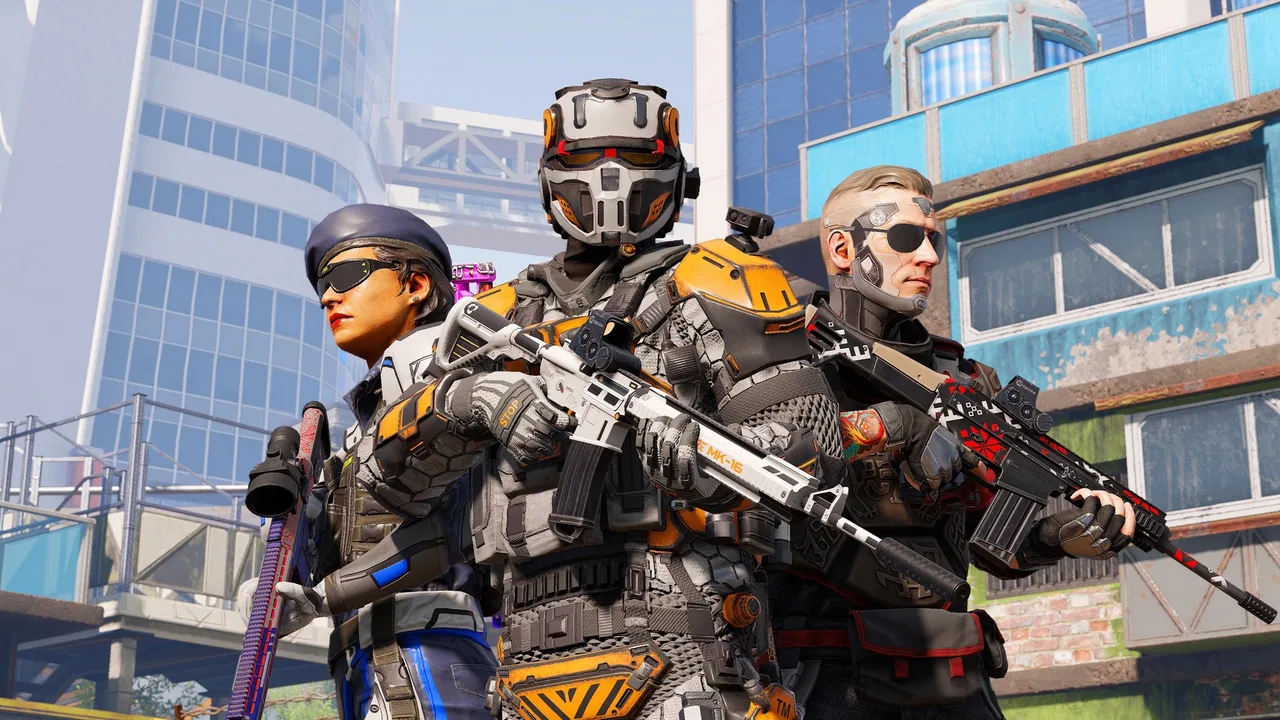
Battle Prime does not need a large narrative to establish its setting. The modern military styling does most of that work through equipment, uniforms, weapon handling, and environments designed around combat sightlines. The visual language tells me to expect disciplined movement, controlled bursts, and attention to cover rather than fantasy powers or exaggerated cartoon chaos.
The third-person view is especially important to the atmosphere. I see the character as part of the scene, which makes movement feel more expressive and helps me understand how exposed I am. At the same time, the camera can create a slight tension between what my character sees and what I can observe from the screen. I learned not to confuse a visible shoulder or a glimpse around cover with complete safety. That is one of the game's less obvious lessons: camera awareness helps, but it can also encourage overconfidence.
The art direction supports readable combat. Opponents need to stand out against the environment quickly, and the military setting gives the maps a believable reason for lanes, barriers, and defensive positions. I appreciate that the scenery is not merely decoration. A wall, vehicle, doorway, or elevated position changes how I approach a fight, and the environment therefore contributes to the mood through play rather than through background detail alone.
Players who want a story-driven war game may find this setting too functional. The world exists mainly to support player-versus-player combat, so the emotional tone comes from pressure, uncertainty, and teamwork instead of character development. That is not a flaw for me, but it is a useful distinction. If you are looking for a campaign with memorable dialogue and a carefully developed plot, this is not the right kind of military game.
Sound gives each encounter its rhythm
Sound is most useful here when it helps me understand the pace of a match. Gunfire signals immediate danger, movement creates suspicion, and a sudden burst of activity can reveal that an apparently quiet area is about to become contested. I do not experience the battlefield as a flat visual screen; audio helps me decide whether to hold position, rotate, or wait for an opponent to make the first mistake.
I recommend playing with headphones when possible, especially in competitive matches. The benefit is not just louder effects. A clearer sense of direction can stop me from staring at the wrong lane while an opponent approaches from another angle. This is one of the simplest practical improvements for a new player: before changing weapons or spending resources, improve the information you receive from the battlefield.
The sound design also supports the game's mood by keeping combat tense without turning every moment into constant noise. The best matches have a rhythm of quiet movement, brief contact, retreat, and renewed pressure. That rhythm gives pacing its shape. When both teams rush continuously, the game can feel messy; when players use cover and listen before committing, the same systems create a more controlled tactical exchange.
There is a trade-off, though. Audio awareness can make the game more demanding than a casual shooter that is played mostly by sight. If you prefer playing silently or while distracted, you will lose some of the information that makes careful positioning work. I can still enjoy a relaxed session without headphones, but I am less confident in close fights and more likely to react late.
Where the mechanics fit together
The central appeal is the combination of third-person shooting, mobile controls, and player-versus-player pressure. I need to aim accurately, but accuracy alone is not enough. A player with a less powerful position can still win by choosing a better angle, waiting for a reload, or forcing an opponent into the open. That gives the matches a useful layer of decision-making beyond simply firing faster.
My most reliable workflow is to separate movement into three questions: where is my next piece of cover, what information do I have about the enemy, and what happens if the first shot does not finish the fight? Thinking this way prevents the common mobile-shooter mistake of sprinting into a promising area with no exit plan. It also makes deaths easier to understand because I can identify whether the problem was aim, timing, route choice, or impatience.
The third-person perspective makes cover unusually important. I can use the camera to check a route while keeping my character relatively protected, but I still have to expose myself to deal damage. That creates a satisfying push and pull. Holding a position too long can make me predictable, while moving constantly can destroy my accuracy and leave me vulnerable. The strongest play sits between those extremes.
Another useful insight is that pacing changes depending on how many players are actively contesting an area. A quiet lane may be valuable because it gives me time to reposition, not because it is safe forever. I often get better results by using a calm moment to reach a stronger angle rather than chasing a distant opponent. In other words, silence is an opportunity to prepare, not permission to relax.
New players should resist judging a weapon or character after one poor match. Competitive games amplify small mistakes, and a setup that feels weak while attacking may become effective when defending a narrow route. I would spend several matches observing what range and movement style feel natural before deciding what to keep using. This is more useful than changing choices after every defeat.
The game is also a better fit for players who enjoy improvement through repetition than for people who want instant dominance. The controls can be approachable, but reading opponents and managing exposure takes practice. A touchscreen may never feel as precise as a controller or mouse, particularly during rapid turns. If your priority is maximum competitive precision, a traditional platform shooter will probably suit you better.
Everyday use: short sessions with real concentration
A realistic use case is a ten-minute break when I want something more engaging than a passive app. I can start a match, focus on a single objective such as improving positioning, and stop after the session without needing a long uninterrupted evening. That makes the game convenient for commuting, waiting, or a short rest between tasks, provided I have a stable connection and enough attention to play responsibly.
I would not recommend starting a match when I know I will be interrupted repeatedly. Even a short competitive round demands awareness, and leaving at the wrong moment can hurt the team and make the experience frustrating. This is not a game I would play while multitasking. Its compact format is convenient, but the combat still rewards concentration.
For families, the Teen rating is worth taking seriously because the game is built around modern armed combat. Parents should also remember that free-to-play design can include optional purchases. I would use the game’s purchase controls and set a personal spending boundary before handing a device to a younger player. The broad audience and free price make it easy to try, but those advantages should not replace sensible supervision.
How it compares with familiar alternatives
Compared with a traditional first-person shooter, Battle Prime gives me more visual awareness of my character and surroundings. That makes movement and cover easier to read, but it can also make encounters feel less intimate than a first-person duel. Players who enjoy precise sight alignment may prefer the immediacy of a first-person alternative, while players who like watching their character move through the environment may find this format more comfortable.
Compared with a slower tactical shooter, it is easier to enter and better suited to short sessions. The cost is that the mobile pacing can feel less methodical, and matches may become hectic when several players converge. A slower alternative is better for someone who wants careful planning, long sightlines, and more time between engagements. Battle Prime is the better choice when I want tactical decisions inside a quicker loop.
It also differs from arcade shooters that focus almost entirely on constant action. The military art direction, cover use, and audio cues give me reasons to pause and assess. Still, it is not a stealth game or a realistic simulator. If you want elaborate resource management, a campaign, or a highly authentic military model, another category of game will provide more depth.
Practical expectations before installing
The game is free, but I would not approach it as a completely frictionless experience. Competitive mobile shooters can place pressure on battery life, screen space, network stability, and touch accuracy. I would lower distractions, use headphones, and avoid playing with a weak connection if the match matters to me. Those small choices improve consistency more than constantly chasing a new loadout.
I would also keep purchases separate from performance expectations. The presence of items priced from $0.49 to $99.99 means the store deserves attention, especially for anyone who tends to buy impulsively. My advice is simple: play enough to decide whether the shooting itself is enjoyable before considering optional spending. If the core loop does not feel good for free, purchases will not solve that problem.
The current version, 14.1.8, is the version I would look for when checking the app on a compatible device. The minimum operating system is Android 10, so anyone using an older Android release should check compatibility before planning a session. That practical check matters because a good shooter is of little use if the device cannot run it comfortably.
The atmosphere earns its place in the design
What stays with me is the way art, sound, and pacing reinforce the same idea: every exposed step can become a tactical mistake. The visuals establish a modern combat space, the audio warns me when the situation changes, and the match rhythm gives me moments to decide whether to advance or wait. None of these elements replaces the mechanics, but together they make the shooting feel more coherent.
The atmosphere is strongest when I play patiently. Rushing strips away much of the game's personality and turns it into a sequence of chaotic exchanges. Holding cover, listening for movement, and choosing a route lets the setting become part of the strategy. That is also why the game can surprise players who expect a simple run-and-fire experience from a mobile title.
My main reservation is that the same competitive design that creates tension can create frustration. Touch controls, sudden encounters, interruptions, and optional purchases all add friction. The game asks for focus, and it may not feel relaxing after a string of losses. I would skip it if I wanted a purely casual shooter, a narrative adventure, or a game that can be played comfortably without sound or attention.
For the right player, however, Battle Prime offers a convincing blend of modern military presentation and compact competitive action. I would recommend it to someone who enjoys third-person shooting, short but focused matches, and the satisfaction of improving through better routes and timing. I would be more cautious with players who dislike free-to-play stores, need controller-level precision, or prefer a complete single-player experience.
My final view is positive because the game understands its own scale. It does not need a long campaign to create tension; it uses the battlefield, the camera, the sound, and the pressure of other players to make a small session feel meaningful. Its biggest strength is the way atmosphere and positioning work together, while its biggest weakness is the friction that comes with competitive mobile play. If that trade-off sounds acceptable, this is a free action game worth trying rather than dismissing as another quick shooter.
FAQs for Battle Prime: FPS gun shooting
01What is Battle Prime: FPS gun shooting?
Battle Prime: FPS gun shooting is a competitive online multiplayer shooter for Android and iOS. Players control powerful Prime characters, each with different abilities, weapons, and play styles, in fast-paced team battles. Matches focus on direct combat, movement, and objective-based teamwork rather than a traditional single-player campaign, making the game best suited to players who enjoy short, action-heavy online matches.
02Can Battle Prime be played offline?
No, Battle Prime is primarily an online game and requires a stable internet connection to access its main features. Multiplayer battles, matchmaking, progression, events, and most account-related content depend on communication with the game servers. A reliable Wi-Fi or mobile-data connection is recommended, especially during competitive matches, because interruptions can cause lag, disconnections, or penalties for leaving a battle early.
03Is Battle Prime free to download and play?
Battle Prime can generally be downloaded and played for free, but it includes optional in-app purchases. Players may encounter premium currency, cosmetic items, progression-related offers, battle passes, or other purchases while using the app. Spending money is not required to try the game, although some users may prefer purchases to unlock content more quickly or customize their experience.
04Does Battle Prime support multiplayer competition and team play?
Yes, multiplayer competition is the central part of Battle Prime. You can join matches against other players, cooperate with teammates, select a Prime that fits your preferred role, and adapt your strategy to the map and game mode. Success depends on aiming, positioning, movement, ability usage, and communication, so players who ignore teamwork may struggle even when they have strong equipment.
05What devices and performance requirements does Battle Prime have?
Battle Prime is a visually demanding mobile shooter, so performance depends greatly on your device. Newer Android phones and iPhones usually provide smoother graphics, faster loading, and more stable frame rates, while older or entry-level devices may require reduced visual settings. Before downloading, make sure your phone has sufficient free storage, an updated operating system, and enough battery capacity for extended online sessions.
Pros
- Sharp graphics and detailed maps look impressive on modern phones.
- Matches are short
- making it easy to play during quick breaks.
- Different Prime abilities add variety to standard FPS combat.
- Responsive controls support both casual and competitive play.
- Regular events and rewards help keep the game feeling active.
Cons
- High visual settings can drain your battery quickly.
- Some weapons and abilities may feel unbalanced after updates.
- Progression can become grind-heavy without frequent play.
- Online matches depend heavily on a stable internet connection.
- The large download and extra resources use considerable storage.

Battle Prime: FPS gun shooting
Gallery